AI in Bucket of water with Physical Reservoir Computer
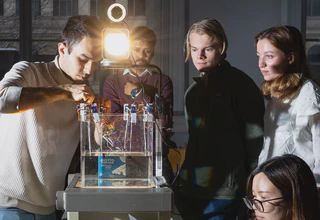 Kevin Fuchs/TU Berlin
A Berlin University Alliance (BUA) Course for engaging students with hands on research by building a Physical ML device that run on water and helping young scientists lead research groups. Here is the main project page.
My role as a Young Group Leader – Project & Team Leadership
As a young group leader, I design and lead interdisciplinary research projects that connect machine learning, physics, and engineering. For my BUA-funded X-Student Research Group “Physical Reservoir Computing: AI in a Bucket of Water”, I developed the complete concept—from proposal writing to course structure, research design, and team organization.
Leadership Roles
Grant Acquisition & Project Design
Conceived the project idea, wrote the successful BUA proposal, and created the full research and teaching plan.Course & Structure Development
Designed a clear three-phase program (theory → implementation → results) with defined roles, milestones, and deliverables.Team Leadership & Mentoring
Guided an interdisciplinary student group, facilitated collaboration, and provided continuous scientific and technical supervision.Organization & Project Management
Coordinated weekly schedules, managed work division (in-silico RC vs. physical RC), and ensured smooth progress and documentation.Research Training
Supported students in scientific methods, coding, experimental work, and communicating their results.
Project: Physical Reservoir Computing – AI in a Bucket of Water
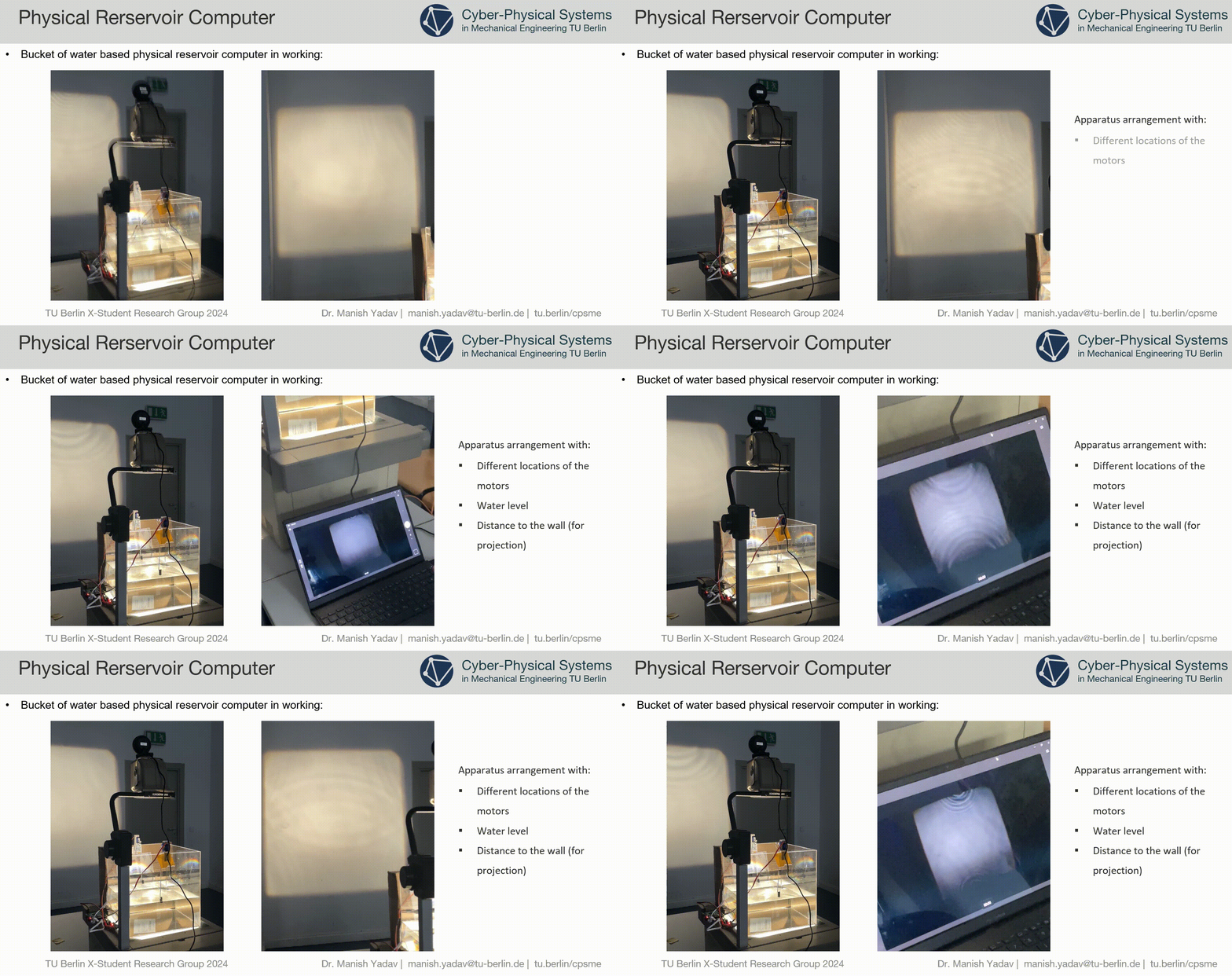
This project explores an unconventional form of AI that uses the natural dynamics of water as a computational system. Ripples on the water surface act as a physical reservoir computer: the reservoir is excited by small disturbances, recorded with a camera, and processed through a simple linear readout. This creates an energy-efficient and nature-inspired machine learning system and serves as a demonstrator for sustainable AI.
Team Structure
Group 1: In-Silico Reservoir Computing
Develop RC algorithms, solve benchmark tasks, and explore novel applications.Group 2: Physical Reservoir Computing Setup
Build the water-based RC system, including hardware, micro-controller control, and video-based signal processing.
Outcomes
- A working physical Reservoir Computer based on water
- Open-source code, hardware documentation, and datasets
- BUA Conference Presentation 2024 - Session A1.2: “Physical Reservoir Computing: AI in a Bucket of Water”
